Custom Foot Orthotics
Custom foot orthotics are individually designed devices that fit your feet and are prescribed according to your foot structure, symptoms, movement, footwear and lifestyle. They can help provide support, redistribute pressure and improve comfort and foot function.
What Are Custom Foot Orthotics?
Custom foot orthotics are individually designed devices that are made to fit the shape and needs of your feet. They are worn inside your shoes to help support the feet, improve how pressure is distributed, and assist with foot and lower-limb function. Unlike standard shoe inserts, custom orthotics are prescribed and designed based on an individual's foot structure, symptoms, movement patterns, footwear and lifestyle.

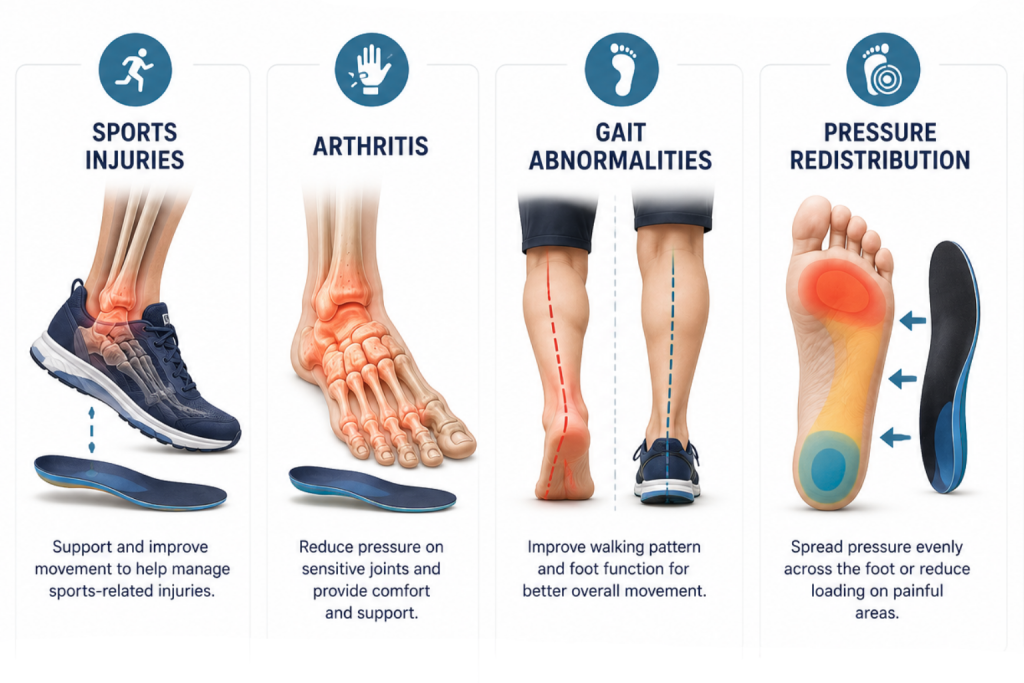
Custom foot orthotics may help to:
- Support the foot and ankle
- Redistribute pressure across the foot
- Improve foot function during walking and other activities
- Reduce excessive or abnormal loading on specific areas of the foot
- Assist with certain gait abnormalities
- Improve comfort during everyday activities or sport
- Help manage specific foot and lower-limb conditions
- At OP Active, custom foot orthotics are selected and designed according to your individual clinical needs rather than using a one-size-fits-all approach.
Who Can Benifit From Foot Orthotics?
Foot orthotics may be recommended for people experiencing a range of foot and lower-limb problems. They can be used to provide support, improve pressure distribution and assist with the management of mechanical or functional problems. Some of those problems include the following:

PLANTAR FASCIITIS
The plantar fascia is a strong band of connective tissue that runs along the underside of the foot, connecting the heel area towards the toes.
Plantar fasciitis is commonly associated with pain around the underside or inside of the heel. Pain may be particularly noticeable with the first steps after getting out of bed or after a period of rest.
Orthotics may form part of a broader treatment programme for plantar fasciitis. The aim is to help manage mechanical loading and improve pressure distribution through the foot.
METATARSALGIA
Metatarsalgia refers to pain in the forefoot, commonly felt around the ball of the foot beneath the metatarsal heads. The metatarsal bones connect the midfoot to the toes and help transfer load during walking and running. Increased or uneven pressure in this area can contribute to forefoot pain.
One of the main goals of orthotic treatment for metatarsalgia is pressure redistribution.
The position and shape of a metatarsal pad are important. It is generally positioned to help redistribute load away from the painful metatarsal heads rather than directly underneath the most painful point.
Orthotic design should therefore be based on an individual assessment rather than simply adding the same modification to every device.


FLAT FEET
Flat feet, also known as pes planus, occur when the natural arch along the inside of the foot is lower than usual or appears to collapse when standing. The foot may also roll inward excessively, a movement known as overpronation.
Some people naturally have flat feet without experiencing any problems. However, in some individuals, reduced arch support or excessive foot movement can contribute to pain or increased loading of the feet and lower limbs.
Custom orthotics can be designed to provide appropriate support and control based on the individual's foot structure and movement pattern.
The aim is not necessarily to force the foot into a particular position, but to provide the appropriate amount of support for the individual's needs.
HIGH ARCHES
High arches, also known as pes cavus, occur when the arch of the foot is higher than usual. A high-arched foot may have less surface area in contact with the ground, which can result in increased pressure being placed through the heel and forefoot.
Some people with high arches have no symptoms, while others may experience foot pain, calluses, instability or difficulty finding comfortable footwear.
With high arches, the goal is often to accommodate the shape of the foot and improve pressure distribution rather than simply trying to support the arch.
The design of the orthotic will depend on the height and flexibility of the arch, symptoms, footwear and activity level.

Custom VS Off-The-Shelf?
Not all foot orthotics are the same. The main difference between custom and off-the-shelf orthotics is how they are selected and designed.

CUSTOM ORTHOTICS
Custom orthotics are designed specifically for the individual following an assessment. Their design can take into account factors such as:
- Foot shape and structure
- Areas of pain or pressure
- Gait and movement patterns
- Previous injuries or surgery
- Work and daily activities
- Sports and exercise requirements
- Specific clinical conditions
OFF-THE-SHELF ORTHOTICS
Off-the-shelf orthotics are pre-manufactured and available in standard shapes and sizes. They can be useful for general support and may be appropriate for people with relatively straightforward needs.
However, they are not specifically designed around an individual's foot structure, symptoms or movement patterns
Which One Is Right for You?
A custom orthotic is not automatically better for everyone. The most appropriate option depends on the individual's symptoms, foot function, lifestyle and clinical requirements.
An assessment by a qualified orthotist can help determine whether you would benefit from a custom orthotic, an off-the-shelf device, footwear modifications or another form of treatment.

What to Expect at a Consultation

